



The Treasurer’s 2026–27 Federal Budget marks a clear and deliberate shift in Australia’s tax and investment landscape.
Framed around the theme of intergenerational fairness, the Government has announced a coordinated package of measures targeting negative gearing, capital gains tax and discretionary trusts — reforms that collectively represent the most significant change to wealth and investment structures in decades.
Delivered against a backdrop of slowing growth, rising inflation and heightened global tensions, the Budget prioritises structural tax reform over fiscal caution. The headline measures are modest – a tax cut of up to $250 for working Australians, a new $1,000 instant deduction for work related expenses, and continued support for small business through permanent instant asset write offs and the loss carry back regime.
For investors and business owning families, however, the implications are more far reaching. Negative gearing for residential property will be fundamentally reshaped, the long standing 50% CGT discount will be replaced with indexation from 1 July 2027, and discretionary trusts will face a flat 30% trustee level tax from 2028.
Taken together, they represent a structural shift in the accumulation and deployment of capital. Long established strategies that have operated for decades are now being reshaped — in some cases dismantled — with far reaching consequences for investment returns, succession planning and family wealth.
The detail matters, and significant legislative work still remains. In the newsletter, we explore each measure in depth and outline what these reforms may mean for investors, business owners and family groups.
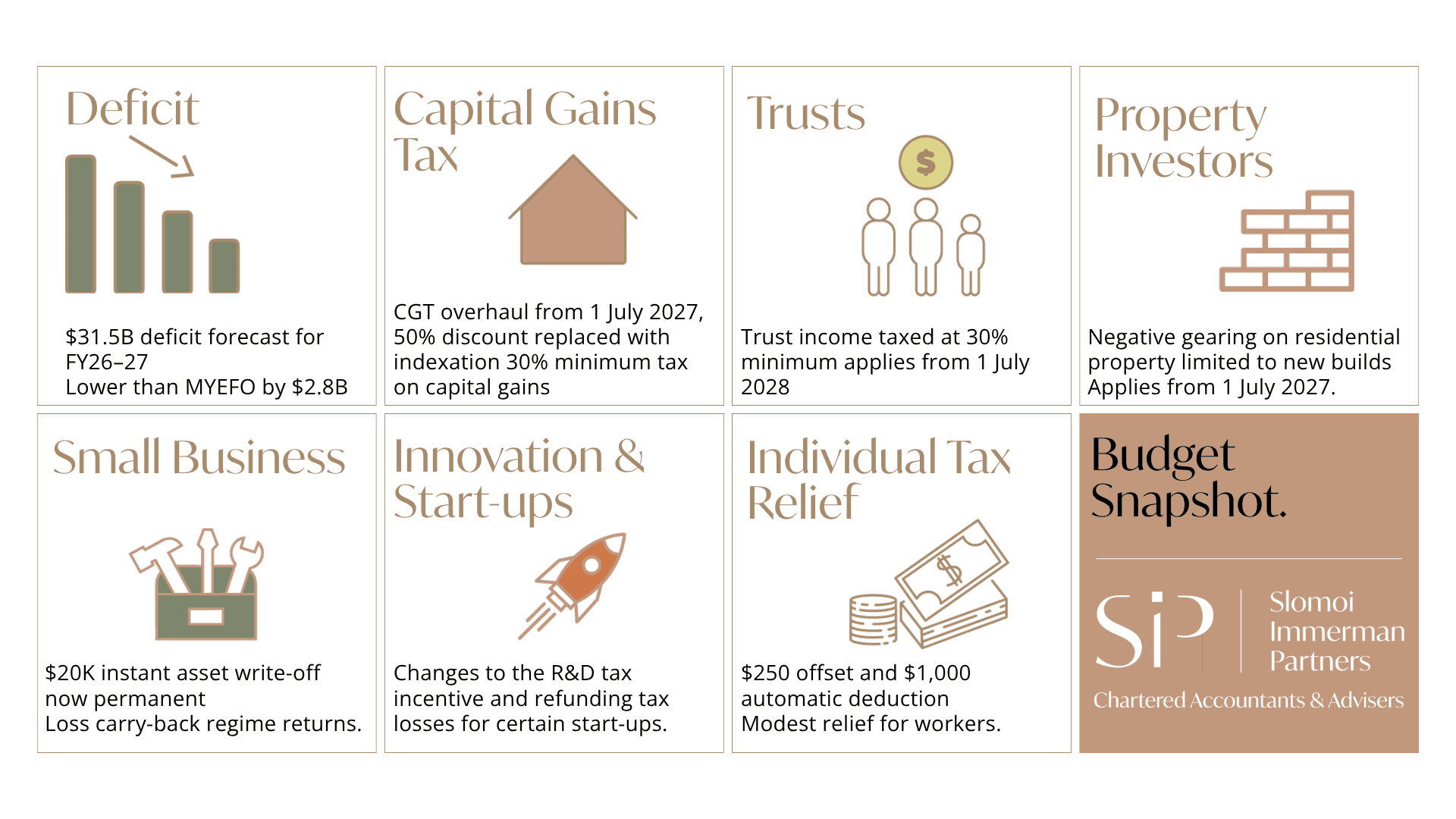
With many more details inside, we proudly present our federal budget summary and what it means for private groups and family businesses.
